
Notes from Nairobi
How Nairobi moves money and builds the show

M-Pesa, 19 years later
I forgot to pack my debit card…
After landing in Nairobi, the only cash I could reliably access was the $200 I had brought with me. Thank goodness it’s 2026.
My first trip to Kenya was in the summer of 2007, only a few months after Safaricom1 launched M-Pesa. Back then, M-Pesa was a new way to send money using a mobile phone. Today, it is the financial infrastructure of everyday life.
Getting set up is straightforward. You walk into a Safaricom store that feels like a DMV: check in, take a printed ticket (mine was D516), sit until your number appears and then, you walk up to the counter. Present your passport, select a phone number and plan, pay (they accept credit cards now) and voilà, you now have an active eSIM and M-Pesa account.
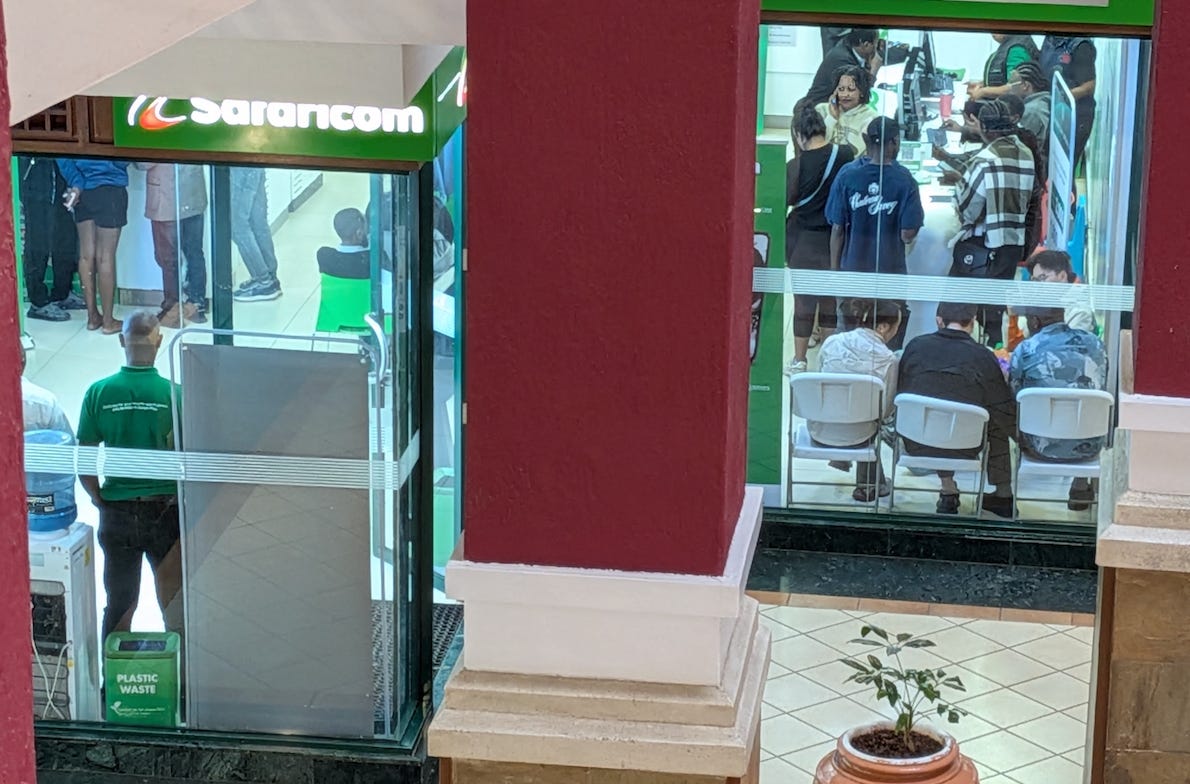
How M-Pesa became Kenya’s financial infrastructure
2003–2006: Vodafone and Safaricom pilot a phone-based system for disbursing and repaying microfinance loans in Thika, north of Nairobi. But borrowers begin using it to send money over long distances, revealing a larger need: workers in cities lacked a safe, affordable way to send cash home to their families. The team rebuilds the product around P2P transfers and recruits local shops to serve as cash-in/cash-out agents. The breakthrough was connecting digital transfers to the cash economy, turning basic phones into wallets and neighborhood shops into financial access points (essentially ATMs).
March 2007: Safaricom launches M-Pesa around a simple promise: “Send Money Home.” Customers deposit cash with a local agent, transfer electronic money to any M-Pesa phone number via SMS, and allow the recipient to withdraw it from another agent cheaply and within seconds. The phone number becomes the financial address.
2011: Independent fintech M-KOPA launches in Kenya, using mobile micropayments (M-Pesa) to offer pay-as-you-go financing—first for solar systems in rural homes, and later for smartphones, electric motorbikes, cash loans, device protection, and health coverage. Its growth demonstrates that M-Pesa can support entirely new business models.
2012–2013: Safaricom formalizes its Buy Goods merchant service in 2012 and pushes Lipa na M-Pesa into the mass market in June 2013. Existing PayBill numbers support payments to utilities, schools and institutions, while Buy Goods till numbers let retailers accept cashless payments. M-Pesa expands from “sending money home” to “paying for everyday life”.
November 2012: Safaricom and Commercial Bank of Africa (now part of NCBA) launch M-Shwari, combining interest-bearing savings with short-term loans. Eligibility and limits are informed by customers’ savings and their use of M-Pesa and other Safaricom services. M-Pesa becomes a distribution layer for banking.
January 2019: Safaricom, NCBA, and KCB launch Fuliza, an overdraft facility that lets customers complete M-Pesa transactions when their wallet balance is insufficient. Credit is now embedded directly in the payment flow.
April 2026: Safaricom rolls out My OneApp, consolidating M-Pesa and MySafaricom while bringing payments, savings, credit, investments, telecom services and third-party mini apps into one interface. It is Safaricom’s clearest bid to turn M-Pesa into a Kenyan super app.
The larger arc looks something like this:
Telecom network → payment rail → financial services distribution layer → platform
My OneApp, Kenya’s new super app?
The new app is quite sleek. Enter a merchant’s till number or an individual’s phone number and M-Pesa displays the registered name before you confirm the payment. It’s a small feature that makes an enormous payment network feel remarkably intuitive and safe to use.
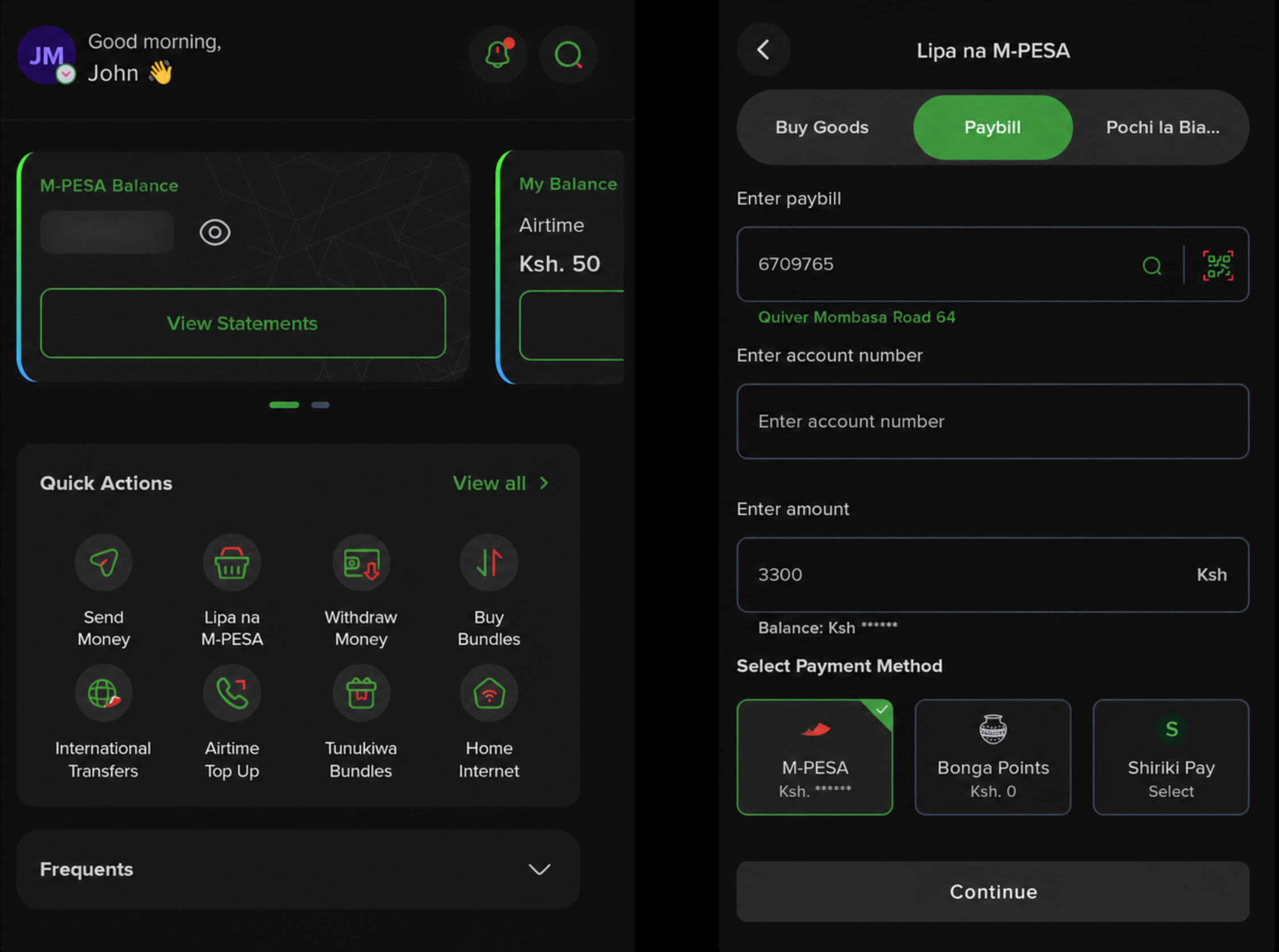
Today, M-Pesa’s scale is difficult to overstate. Between April 2025 and March 2026, it processed 46.4 billion transactions worth Ksh41.7 trillion (~$320B USD) from nearly 41 million monthly active customers, supported by 333,000 agents and 3.13 million merchant accounts (1.04 million active Lipa na M-Pesa merchants and 2.09 million Pochi la Biashara wallets serving the informal economy).2
The checkout screen (R) hints at how broadly the ecosystem has expanded. Alongside the standard M-Pesa payment method, users can pay with Bonga Points, Safaricom’s loyalty program, or Shiriki Pay3, which lets an account holder authorize someone else to make merchant payments or P2P transfers from their wallet within a predefined limit.
Safaricom’s ambitions extend well beyond the checkout screen. M-Pesa belongs to a growing family of payment platforms seeking a larger role in everyday life, alongside South Africa-based MTN MoMo, the Philippines’ GCash, and China’s Alipay. The strategy is to deepen the payment network internationally, distribute more financial products (savings, credit, insurance, investment from regulated partners)4, and open the platform to outside businesses. My OneApp brings all three into a single interface.
Getting dollars into M-Pesa
To get started you want to load money into your M-Pesa account. You can’t use a credit card directly. Thus, the conventional options have been to deposit cash through a (human) agent or use an international remittance service to send money to your own M-Pesa number. Wise has the smoothest mobile app experience; Western Union has the best one-off quotes when transfer fees are waived.
But this trip is about learning what is new.
From Base to M-Pesa
My friend, See Eun, recommends that I look at two projects building stablecoin off-ramps for African markets:
UseAzza, an AI-powered crypto agent that operates through WhatsApp linked to a mobile number
Noblocks.xyz, a self-custodial stablecoin wallet and off-ramp into local currency
Different interfaces, same basic premise:
USDC → conversion into Kenyan shillings → deposit into M-Pesa
My setup looks like this:
Create a dedicated MetaMask wallet for the experiment.
Send USDC on Base from Coinbase to that wallet.
Deposit the USDC into Azza or Noblocks.
Add myself as the beneficiary using the phone number attached to my M-Pesa account.
Sell USDC for Kenyan shillings and send the proceeds to M-Pesa.
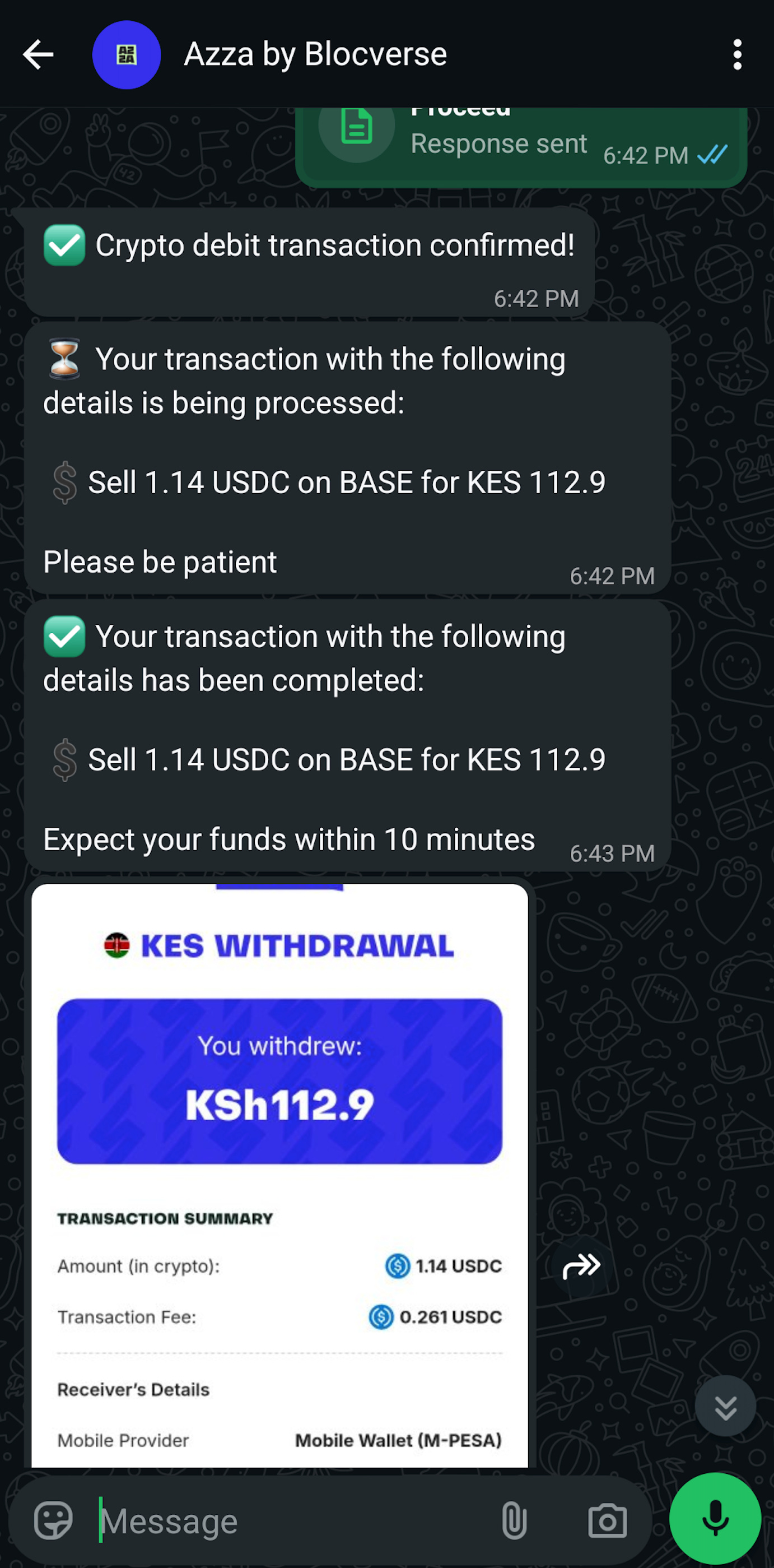
UseAzza conducts the experience through an AI agent on WhatsApp, so much of the transaction can be completed using natural language. One of my transfers hit a snag, but I messaged a founder on WhatsApp and received a quick response5 —a very early-stage blend of software and human customer support.
Noblocks’s interface is more minimal and web-oriented: link wallet, choose network, select currencies to swap, and enter the amount. When I submitted my phone number, NoBlocks displayed the name registered to the receiving account before approving the payout, serving the same reassuring purpose as M-Pesa’s Hakikisha confirmation feature (displaying the name).
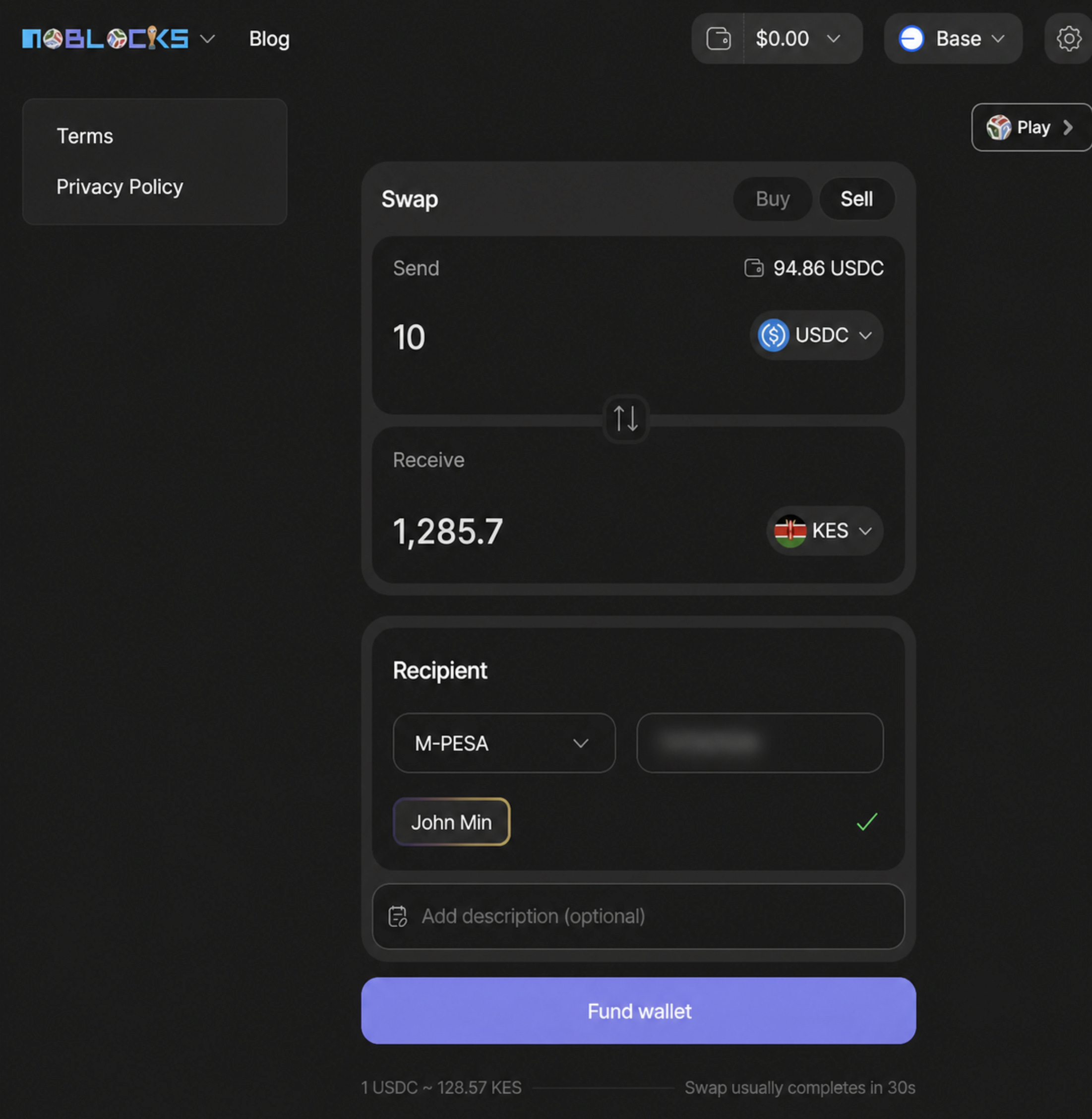
Verdict: In my admittedly small test, Noblocks was more reliable, so it is the product I would use today. Azza’s conversational, mobile-first interface is compelling, though, especially when you are trying to complete a transaction on the go.
Stablecoins v. traditional remittance rails
I compared the options across three dimensions: ease of use, speed, and price, aka the number of Kenyan shillings ultimately delivered.
In my test, the stablecoin route moved money from Base into M-Pesa in roughly five to ten minutes and delivered a competitive exchange rate. Getting started took about 15 minutes: creating a wallet, moving USDC from Coinbase, and learning each off-ramp’s interface. That is manageable for someone already comfortable with crypto, but I would consider it to be considerably more complicated than opening Wise or Western Union and entering a phone number.
The fairest conclusion is that stablecoins have become a credible alternative. While Wise provides a polished mobile app experience and Western Union offers the best rates, NoBlocks delivered the best combination of speed, reliability, and price in my small experiment.
Moving money is only part of the story. I love this fintech infra stuff. But, for most people, the more interesting question is what gets built once that infrastructure works.
Los Angeles Had Showtime. Nairobi Has Thunder.
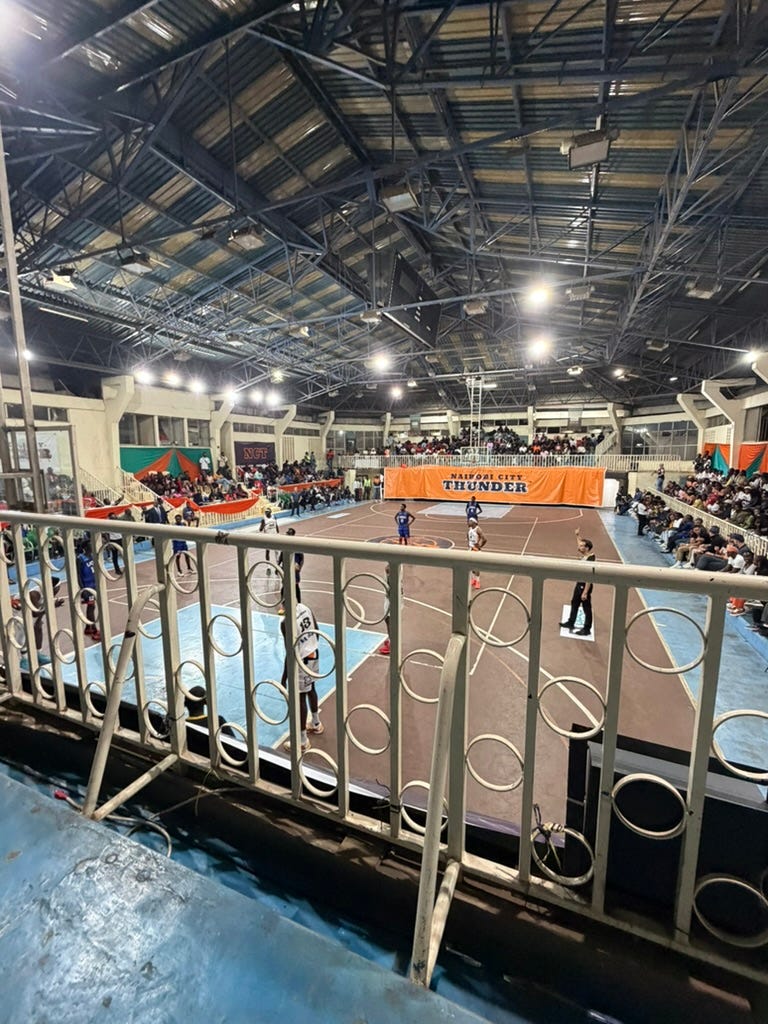
One story I’m watching is the entertainment business taking shape around the Nairobi City Thunder basketball team. After Twende Sports acquired the team in 2023, Colin Rasmussen and company assembled Kenya’s first fully professional basketball roster and set out to build something larger than a winning team: a global brand around African basketball. The roster being built off the court may be even more interesting.
HustleSasa is the Shopify for African creators. The company began by helping creators open storefronts and monetize their audiences; it is now positioning itself as an operating system for live entertainment and sports, bringing ticketing, check-in, merchandise, payments and fan data into one place. I used it to buy tickets to a game, and the credit card checkout flow, powered by Stripe company Paystack, was incredibly smooth.
HustleSasa co-founder and CEO Peng Chen and his wife, Michelle Morgan, are also behind the Alchemist, one of Nairobi’s best-known destinations for food, nightlife and live music. That brings years of experience answering a question every sports organization confronts: how do you turn a game into a night out? Bien-Aimé Baraza and Chiki Kuruka, new investors in the Thunder, add cultural reach extending well beyond basketball.6 Bien is one of East Africa’s biggest musicians and the frontman of Sauti Sol; Chiki’s work spans dance, fitness, media and fashion.
Put those pieces together and the product becomes much bigger than 40 minutes of basketball. I’d keep an eye on this group as it develops a distinctly Nairobi version of the global sports playbook: purpose-built facilities, food and beverage, merchandise, digital fan engagement, music, and a youth academy developing the next generation of talent. If the vision comes together, the Thunder could become one of Africa’s most compelling live experiences and a global showcase for the athletes, artists, and culture behind it.
A few more notes from Nairobi
To round things out, here are some highlights from this trip:
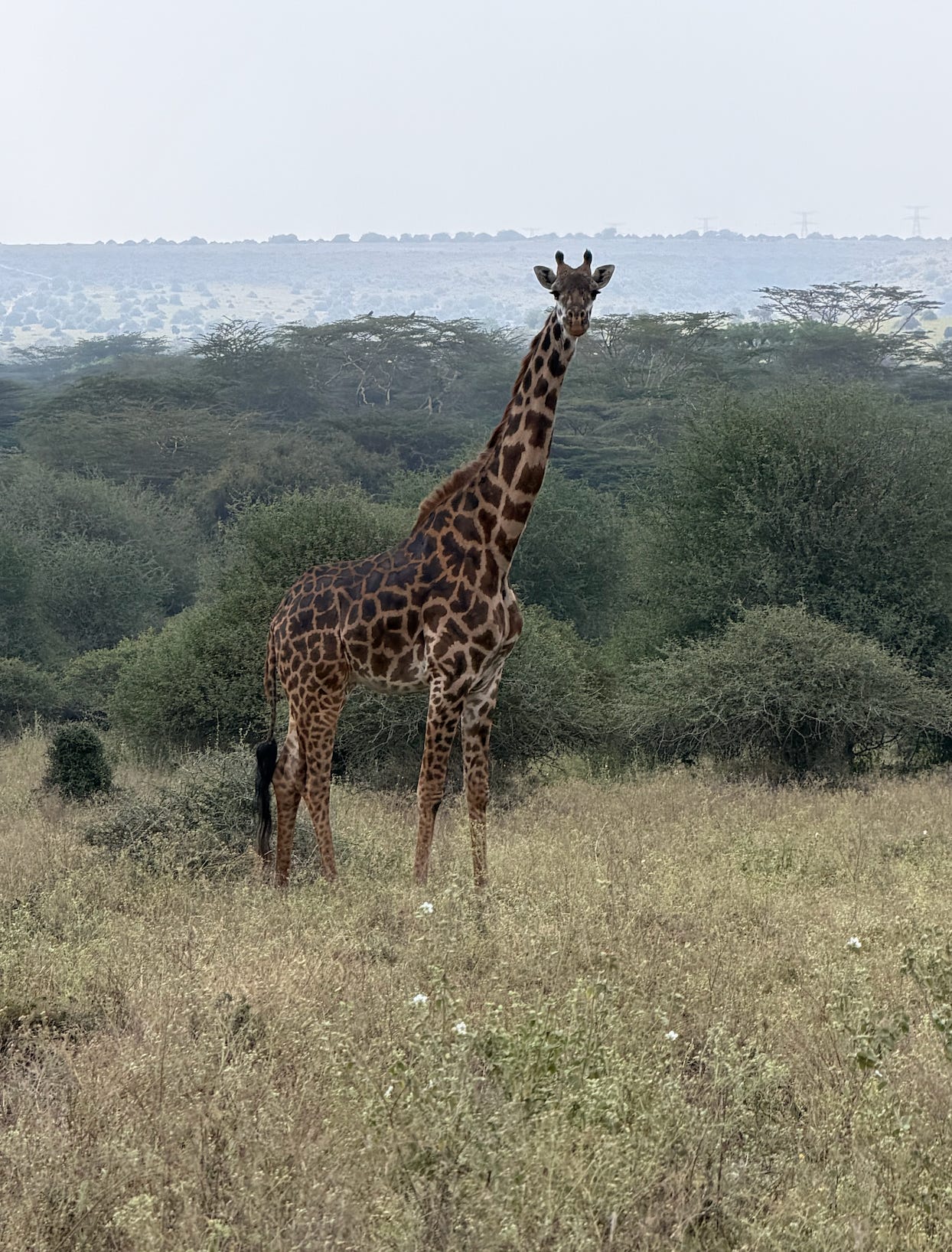
Returning to the School for Field Studies campus in Nairobi National Park after 19 years!
Sunday lunch at Nairobi Korean Church, which may serve the best Korean food in the city. (Yep, I went back to church - more on that some other time).
Underground house music at the Mist.
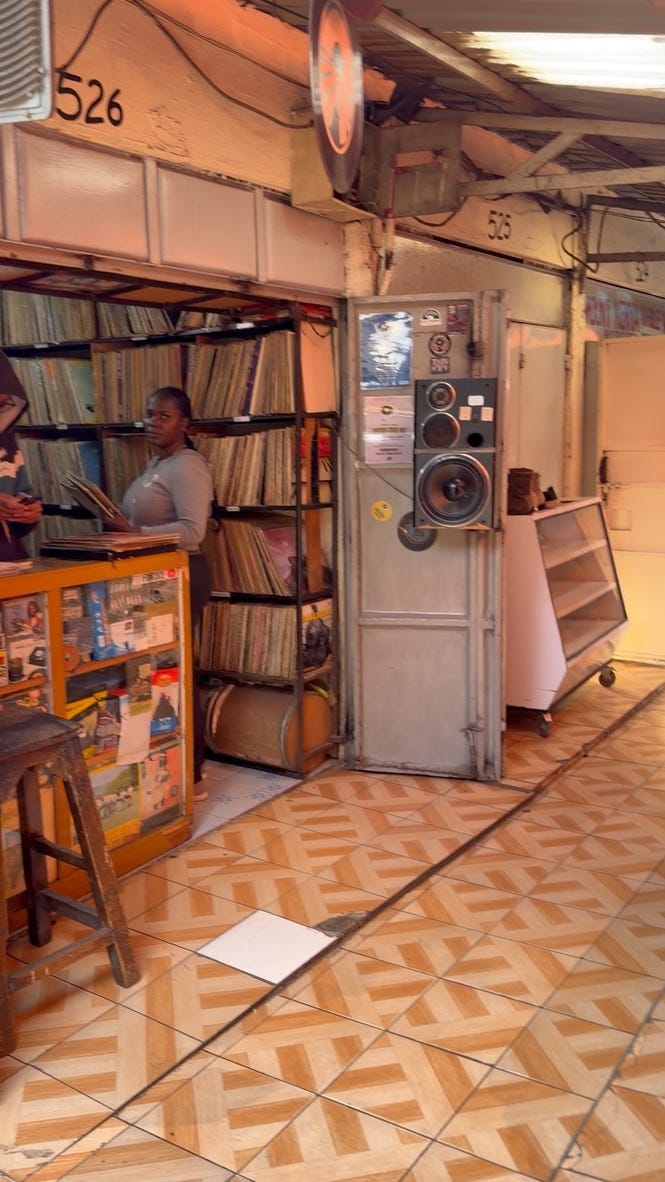
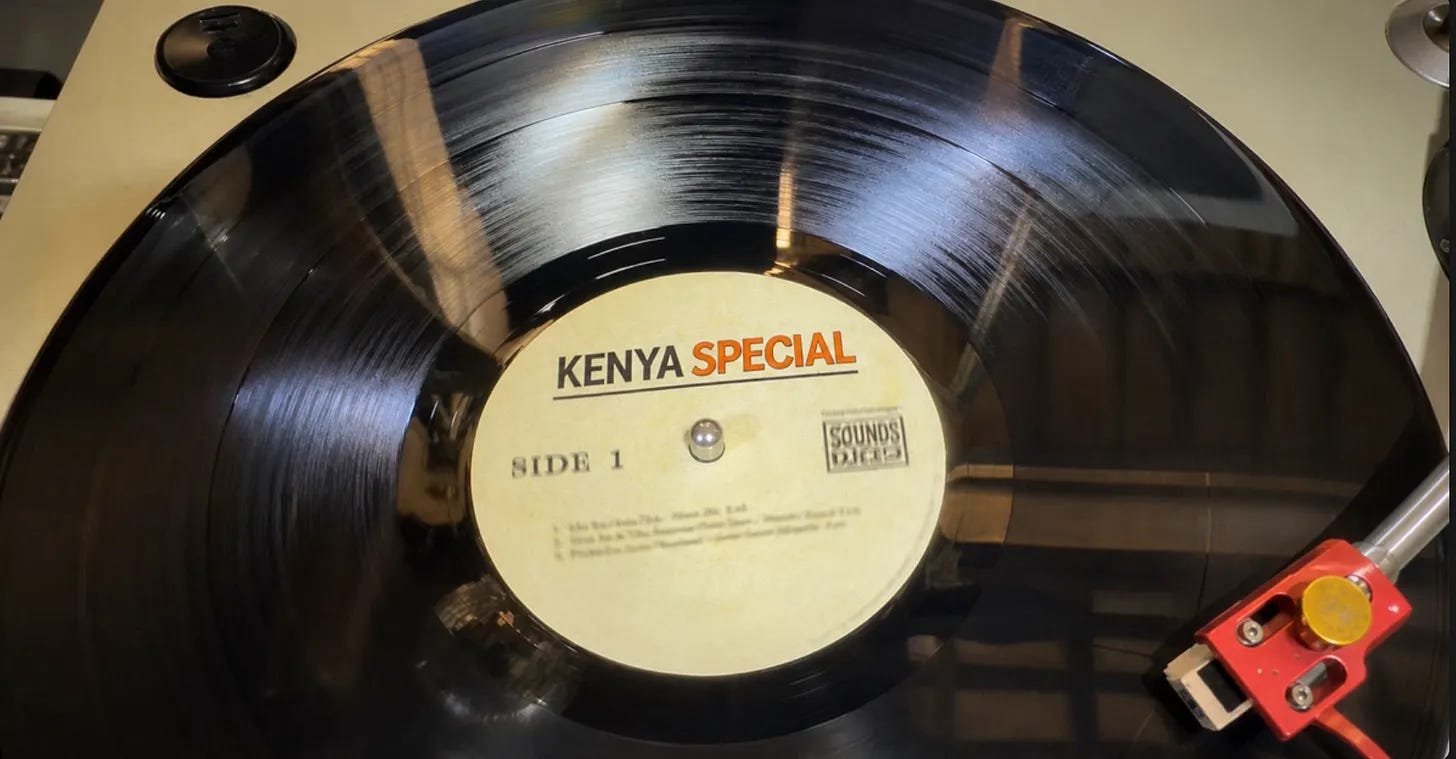
Crate-digging at The Real Vinyl Guru, a record store in Kenyatta Market.7
Kwaheri kwa sasa. Tutaonana kwenye till nyingine.
Goodbye for now. See you at the next till.
Process note: Written and reported by John Min. AI tools were used for research assistance, editorial feedback, and image editing.
Safaricom is Kenya’s largest telecommunications company. During the first quarter of 2026, Safaricom accounted for 68.9% of Kenya’s active mobile connections, 62.7% of mobile-broadband connections, and through M-Pesa 89.1% of mobile-money accounts.
https://www.marketscreener.com/news/safaricom-fy26-results-booklet-ce7f58d3d889f620
https://techcabal.com/2026/02/24/we-tested-m-pesas-latest-feature-shiriki-pay-heres-how-it-works/
https://www.safaricom.co.ke/annualreport_2022/financial-services/#1658944521667-55f43303-e45a
Date & time: 7:09 pm on Sunday → Whatsapp reply in ~10 minutes; full resolution in under an hour.
https://www.mozzartsport.co.ke/other-sports/news/former-sauti-sol-artist-bien-joins-nairobi-city-thunder-ownership-group/65796
Jimmi is the legendary vinyl guru. Read about his story here: https://www.malindikenya.net/en/articles/words/stories/jimmi-the-story-of-the-african--real-vinyl-guru-.html
Hmm there is a fishy smell of not enough ai slop on this post. Not sure i can understand proper writing anymore